How to Choose the Right Remodeling Contractor
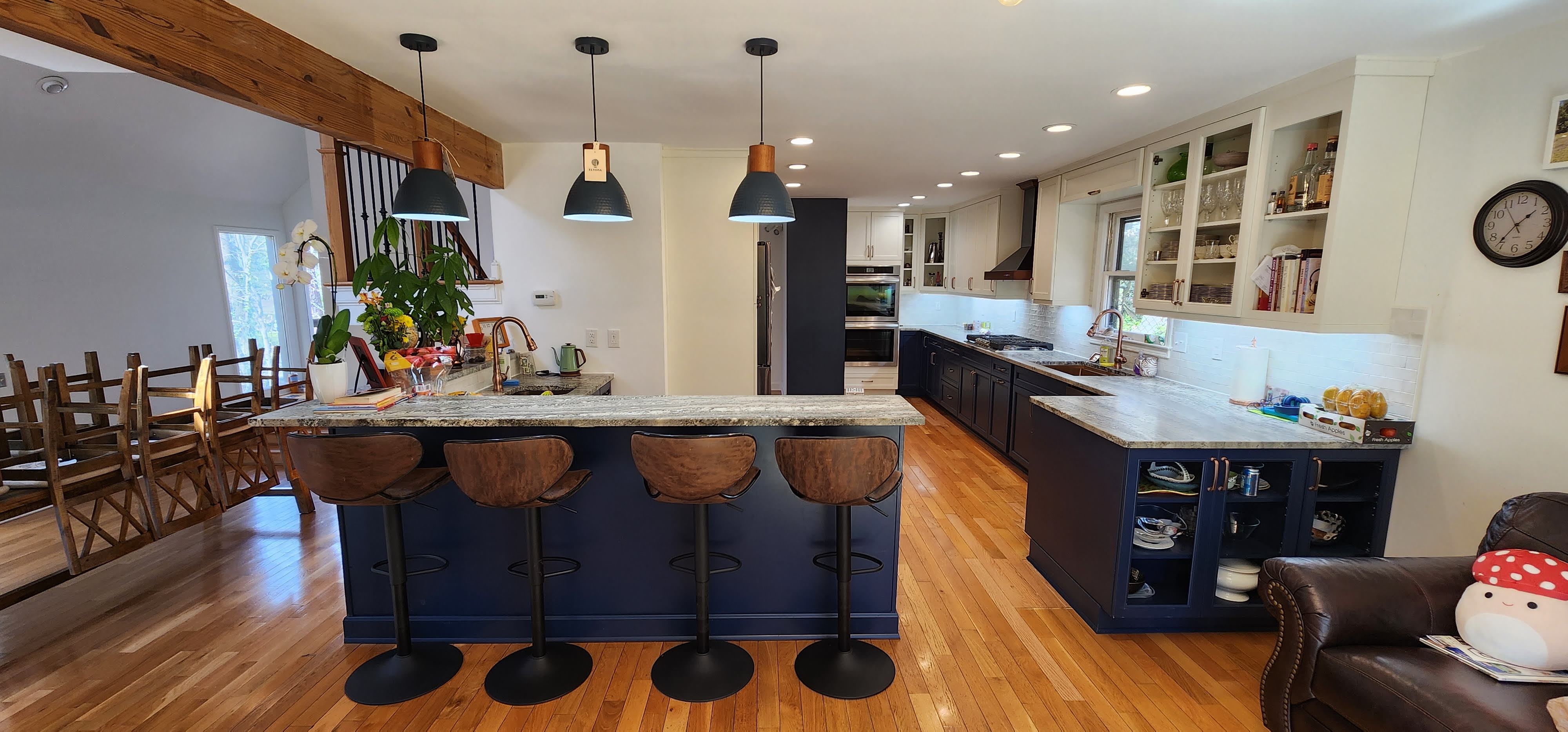
Choosing a high end remodeling contractor can feel harder than choosing the actual tile, cabinets, or layout. Everybody’s photos look polished, everybody sounds confident, and in Atlanta, one firm that shines on a Buckhead kitchen update may be a poor fit for a whole-home renovation in Sandy Springs. This guide makes the decision simpler by showing what to look for, what to ignore, and how to tell the difference between a beautiful sales pitch and a contractor who can actually deliver.
Start with the kind of project You’re actually hiring for
The biggest mistake happens before the first consultation: treating every contractor like the job is the same. It isn’t.
A kitchen remodel, a bathroom remodel, a home addition, a whole-home renovation, and a custom build all ask for different skills, different scheduling systems, and different levels of planning. If your project is mostly cosmetic, such as new cabinetry, finishes, lighting, and fixtures within the existing footprint, your best fit may be very different from the contractor needed to rework structure, move plumbing, or build new square footage.
Here’s the thing: scope changes everything. A firm that handles elegant kitchen transformations may be excellent at millwork, finish selection, and tight sequencing inside an occupied home. That same firm may not be set up for a major addition with engineering, excavation, and months of permit coordination. The reverse is also true. A contractor built for large structural projects may be less refined when your main concern is finish-level detail in a luxury primary bath.
Getting specific about your project upfront helps you compare the right people for the right job. It also helps you avoid quotes that seem wildly different for reasons that have nothing to do with price gouging and everything to do with mismatched scope.
Know the difference between remodeling, renovation, and custom building
These words get tossed around like they mean the same thing. They don’t.
Renovation usually means refreshing what already exists. Think replacing flooring, updating finishes, swapping cabinets, or modernizing fixtures without significantly changing the layout. Remodeling goes further. It changes how the space works, which can include moving walls, relocating plumbing, changing traffic flow, or redesigning a kitchen so it functions better instead of just looking newer.
Custom building is another category entirely. That can mean constructing a new home from the ground up or creating a large-scale addition that behaves almost like new construction. More moving parts, more consultants, more permits, more time.
Why does this matter? Because project type affects budget, staffing, scheduling, and risk. A straightforward renovation might move quickly with fewer unknowns. A remodel that opens walls in an older Atlanta home can reveal outdated wiring, plumbing surprises, or framing issues. A custom build requires much deeper preconstruction planning, often months before visible work starts. If you compare contractors without understanding these differences, the proposals won’t mean much.
What a high end remodeling contractor really does
A high end remodeling contractor should offer more than nicer branding and better photography. Luxury pricing should buy a better process, not just prettier photos.
That process usually includes preconstruction planning, tighter scheduling, coordination with designers and architects, permit management, material tracking, site protection, and a finish standard that holds up when you stand two feet away instead of ten. It also means a higher level of communication. In a premium remodel, you should not be left guessing when cabinets arrive, when inspections happen, or why the plumbing rough-in moved by three days.
This is where the gap between a handyman, a budget remodeler, and a true high-end firm becomes obvious. A handyman might be perfect for repairs and punch-list work. A budget remodeler may get a serviceable room done at a lower price. But once your project includes custom cabinetry, stone slabs, specialty lighting, built-in storage, layout changes, or multiple trades that need to hit precise deadlines, process becomes the product.
And honestly, that’s what you’re buying. Not just the finished kitchen or bath, but the reduced chaos on the way there.
Signs You’re looking at a true high-end firm
A true high-end firm tends to be organized long before demolition starts. Proposals are detailed. Scope is clear. Finish levels are described in a way you can picture, not hidden behind vague phrases like “premium selections.” Schedules may not be perfect, because construction never is, but you should see a real plan.
Past work should show more than dramatic before-and-after shots. Look for consistency across projects. Cabinet reveals should line up. Tile cuts should look intentional. Trim transitions should feel clean. Lighting should look considered, not dropped in at the end because somebody forgot to plan around ceiling joists.
You should also notice range and depth. If your project includes an older Atlanta home, the firm should show experience with older homes. If you want a spa-style bath, ask to see details that matter there, such as waterproofing, niche placement, slab alignment, and how glass, stone, and lighting work together. If your project involves an addition, look for proof of structural coordination and exterior integration so the new work doesn’t look pasted on.
Check licensing, insurance, and local atlanta experience first
Before you get attached to a portfolio, check the boring stuff. It matters more than the mood board.
Any contractor you hire should be properly licensed where required, adequately insured, and willing to show documentation without acting offended. Liability insurance protects your property if something goes wrong. Workers’ compensation matters because injuries on-site can create ugly complications if coverage is missing. If paperwork feels fuzzy at this stage, expect bigger problems later.
Local Atlanta experience matters too. Remodeling in this area comes with neighborhood-specific realities: permitting timelines, inspection habits, older housing stock, tree issues, setbacks, and HOA review processes. A contractor who knows how projects move through local jurisdictions can save you weeks of confusion. That’s especially valuable in established neighborhoods where homes have been altered over decades and what’s behind the walls is anybody’s guess.
The catch is that great craftsmanship alone is not enough. A contractor can build beautifully and still struggle with municipal process. For a simple powder room refresh, that may not matter much. For structural work, additions, or whole-home renovations, it matters a lot.
Ask about permits, inspections, and who handles them
You should know exactly who pulls permits, who schedules inspections, and who is responsible for correcting failed inspection items if something goes sideways. Never let this stay vague.
For structural changes, electrical work, plumbing, HVAC modifications, additions, and full-home renovations, permits are not a side note. They are part of the job. If a contractor suggests skipping permits to save time, that’s not a clever shortcut. It’s a liability wrapped in false efficiency.
Ask how permit timelines are built into the schedule. Ask what happens if revisions are required. Ask who meets inspectors on-site. A contractor who handles this routinely will answer clearly and without drama.
Look past pretty photos and study past work
A portfolio is useful, but only if you know how to read it. Beautiful styling can hide average workmanship.
Start by looking for projects that actually resemble yours in scale, age, and design ambition. If you want a layered, custom kitchen with inset cabinetry, integrated appliances, and a full layout rework, a gallery full of cosmetic updates won’t tell you much. If you’re renovating a 1980s primary bath in Atlanta and want it to feel like a boutique hotel, look for that exact kind of transformation.
Then slow down. Zoom in. The details tell the real story.
What to look for in a portfolio
Look beyond the headline image and pay attention to the decisions underneath it. Are layout changes thoughtful, or does the room still feel awkward? Do cabinets meet the ceiling cleanly? Do stone veining, backsplash lines, and tile transitions look deliberate? Is trim work crisp? Do flooring changes from room to room make sense, or do they feel patched together?
Lighting is another giveaway. Strong projects layer lighting on purpose, with task, ambient, and accent lighting working together. Storage matters too. Good remodeling solves daily friction, not just visual boredom. A kitchen should show practical drawer planning, landing zones, and appliance integration. A bathroom should show smart storage, useful mirror lighting, and details that make cleaning easier instead of harder.
Consistency matters as much as style. One gorgeous hero shot proves almost nothing. Five projects with clean execution say far more.
Ask for references you can actually learn from
References are only useful if you ask useful questions. “Did you like the contractor?” is too broad to mean anything.
Ask how communication felt once work started, not just during the sales process. Ask whether the timeline stayed realistic, whether change orders were explained clearly, and whether costs were documented before extra work happened. Ask about dust control, daily cleanup, and how the home was protected during construction. If your family will live in the house during the project, those details are a big deal.
Also ask how the finished work is holding up six months later. Doors settle. Caulk lines show their age. Paint touch-ups reveal how carefully the project was wrapped. A past client can tell you a lot about how punch-list items were handled and whether small problems were fixed quickly or dragged out.
Compare bids the smart way
The lowest bid is often the most expensive one in the end. Not always, but often enough that you should treat a suspiciously low number like a smoke alarm.
A strong estimate breaks out scope in a way you can follow. You should be able to see what is included, what is excluded, which materials are allowances, and where custom work raises cost. If one proposal is dramatically shorter or vaguer than another, that’s not efficiency. That’s a sign you may be buying surprises.
Allowances deserve special attention. An allowance is a placeholder amount for something not yet selected, such as tile, plumbing fixtures, or appliances. Low allowances can make a proposal look competitive on paper while setting you up for a string of upgrades later. If your taste runs high-end, a bargain allowance for lighting or stone is not really a bargain. It just delays the bad news.
Watch for red flags in proposals
Watch for missing scope details, missing material specs, and language so broad that almost anything could be excluded later. If a proposal says “install tile” but never defines tile size, prep work, waterproofing method, or trim details, you do not have a complete price.
Unrealistically short timelines are another warning sign. So are large upfront payments that seem disconnected from actual progress. Verbal assurances should also make you pause. If a contractor promises custom trim, upgraded hardware, or premium site protection but none of it appears in writing, assume it does not exist.
Paperwork should feel clear, not slippery.
Understand where high-end remodeling costs more
Some costs genuinely rise in high-end remodeling because the work is harder, slower, and less forgiving. Custom cabinetry costs more because it is built to your space, not forced into standard sizes. Layout changes cost more because moving plumbing, gas, electrical, and walls creates a chain reaction. Premium finishes cost more not just to buy, but to install well.
Specialty trades also raise the number. So does tighter project management. A carefully run project involves more coordination, more supervision, and more communication. That overhead can be worth every dollar if it prevents delays, protects materials, and keeps the job from turning into a six-month mess.
The trick is learning to separate justified cost from inflated markup. Higher pricing should connect to a visible improvement in process, workmanship, scheduling, or material quality. If it doesn’t, keep looking.
Pay attention to communication and process
A remodel rises or falls on process, not charm. Plenty of smooth talkers can sell a dream in an hour. Living through construction is where the truth shows up.
You should know who your main contact will be, how often updates happen, and where decisions get documented. Text messages alone are not a system. For a substantial remodel, you want written selections, recorded approvals, updated scheduling, and change orders handled in a consistent way.
Here’s where it gets interesting: good communication is not constant communication. You do not need a flood of messages. You need clear ones, at the right moments, from the right person. If cabinets are delayed, you should hear about the impact and the plan. If demolition uncovers old plumbing that needs replacement, you should get pricing and approval steps before the work expands.
Questions to ask during the consultation
Use the consultation to understand how daily life will work once the project starts. Ask about timeline structure, site protection, cleanup standards, working hours, subcontractor management, and material lead times. Ask how design revisions are handled after pricing. Ask what happens when an unexpected issue appears behind the walls.
You should also ask how often the schedule is updated and how changes are communicated. In an occupied home, ask where materials will be stored, how dust will be controlled, and whether temporary utility interruptions are planned in advance. These questions are not nitpicking. They are the difference between a difficult project and a miserable one.
Make sure the contract protects your time and money
A good contract is like checking a travel itinerary before a big trip. It does not make every delay disappear, but it keeps you from discovering at the gate that half the details were never confirmed.
Your contract should define scope, materials, allowances, payment schedule, estimated start window, estimated completion window, and procedures for delays or changes. It should also state who is responsible for permits, site protection, debris removal, and final punch-list completion.
Read the exclusions carefully. That’s where hidden assumptions like appliance installation, painting, hardware, permit fees, or temporary protection can create friction later. If something matters to you, get it into the contract clearly. Not implied. Not “understood.” Written.
Payment schedules, warranties, and change orders
A reasonable payment schedule is tied to progress, not just dates on a calendar. Deposits are normal, especially when custom materials must be ordered, but the structure should make sense relative to actual work completed.
Warranty language should be specific. You want to know what is covered, for how long, and what counts as normal settling or maintenance versus defective workmanship. Vague warranty language is barely better than no warranty at all.
Change orders should always be priced and approved in writing before extra work begins, unless an emergency makes that impossible for a brief moment. If your contract leaves change order procedures loose, budget drift gets very easy, very fast.
Choose the best contractor for your specific goal
The best contractor is not the one with the flashiest website or the biggest project gallery. It’s the one whose strengths match your actual project.
If your goal is a luxury kitchen, prioritize process, finish quality, and room-specific expertise. If your goal is a whole-home transformation, prioritize planning depth, phasing, structural coordination, and schedule control. If your project crosses into custom home construction, preconstruction and consultant coordination become the main event.
That simple shift changes everything.
Best fit for a kitchen or bathroom remodel
For a kitchen or bathroom remodel, focus on layout planning, finish coordination, and sequencing. These rooms are dense with decisions. Cabinets, plumbing, electrical, tile, ventilation, and lighting all overlap, and small mistakes create visible headaches.
You also want a contractor who knows how to work cleanly in an occupied home. A luxury kitchen remodel should not feel like a construction free-for-all. Protection, cleanup, and communication matter almost as much as craftsmanship because you’ll feel those every single day.
Best fit for a whole-home renovation or addition
For a whole-home renovation or addition, scale changes the game. Look for a contractor with strong preconstruction systems, clear phasing plans, and real experience with structural work and permit complexity.
This kind of project disrupts daily life more deeply, so scheduling honesty matters. Temporary living arrangements, utility interruptions, inspection sequencing, and coordination across multiple rooms all need a firm that can see the full chessboard, not just the next move.
Best fit for custom home construction
If your project is moving beyond remodeling into a fully custom home, the selection criteria tighten even more. You need stronger coordination with architecture, engineering, permitting, site work, and long-range budgeting. Land conditions, buildability, utility access, and design decisions all affect cost before framing even begins.
At that point, the contractor is not just building rooms. Your contractor is helping shape the entire process from paper to final walkthrough. Preconstruction quality becomes one of the clearest predictors of how smooth the rest of the job will feel.
The simple rule that helps you decide
If you remember one thing, make it this: choose the contractor whose process fits your project, not the one whose photos impress you most.
A beautiful portfolio can get your attention. A clear scope, honest pricing, strong references, local Atlanta experience, and a contract that protects your time and money should earn your signature. Before you move forward, try one thing: take your top two proposals and compare them line by line as if you were packing for a two-week trip. The one that leaves fewer unanswered questions is usually the safer choice.
- Disclaimer: This article is for general informational purposes only. It is not professional advice, a quote, or a service agreement. Conditions at your home or property may differ; contact a qualified professional for an on-site evaluation before making repair, safety, or spending decisions.
Disclaimer: This article is for general informational purposes only. It is not professional advice, a quote, or a service agreement. Conditions at your home or property may differ; contact a qualified professional for an on-site evaluation before making repair, safety, or spending decisions.
Tired of guest week chaos?
Tell us where traffic fails when family stays over. We will outline remodel fixes that match how you host.